
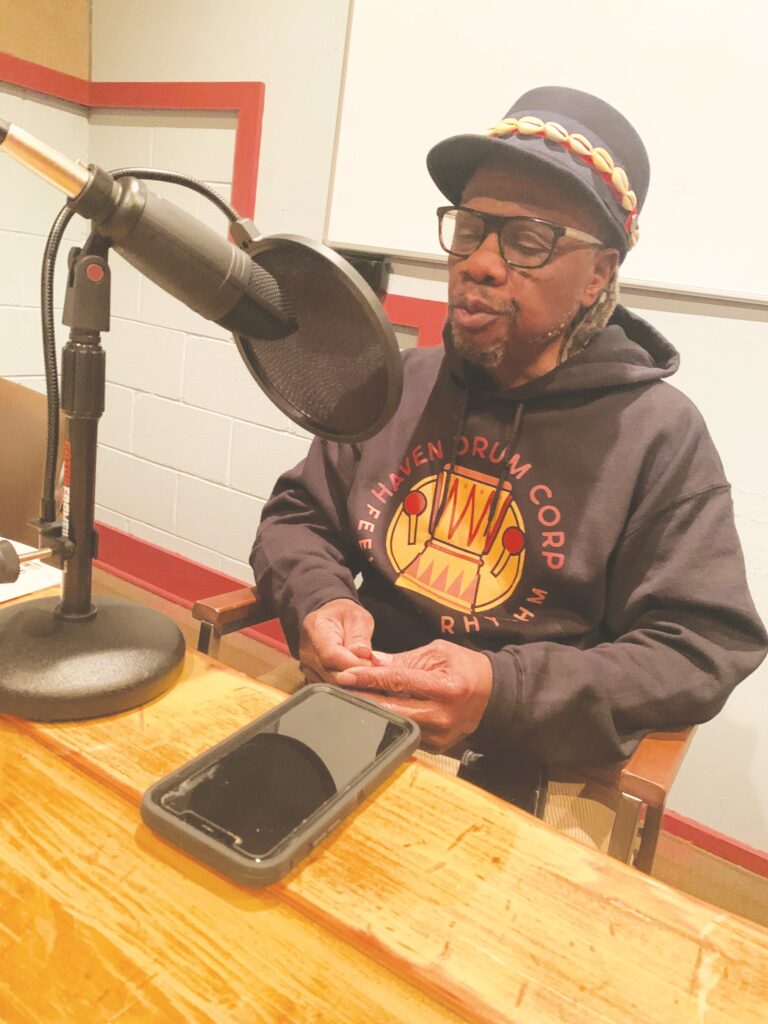

Throughout the spring, I conducted several interviews with Nardie, who is a Portland native and resident, member of the Portland Museum board, founder of the River City Drum Corps and current visual artist and photographer. In the coming months, we’ll be sharing some of the highlights, as well as posting the entire transcripts (including audio!) in our Oral History archive (which is free and open to the public at https://portlandky.org/oral-history/listen/).
While it hardly touches on his entire amazing life history, it’s an epic tale that you won’t want to miss. For now, let’s hear from Nardie what it was like growing up in Portland as kid.
“Portland was a closed community in a big metropolitan city. When you think about Louisville, you think about it as a big metropolitan city. But Portland was a definite city that was a community of its own. You had a pocket on Short Street. You had a pocket at St. Xavier. Owen Alley up here…that was a pocket. Those were all Black families. So we lived in clusters all around Portland. We lived in this 20-block radius. I lived between 21st street to 29th Street, that was my core area where I lived, and everybody knew everybody from generations. So the only time that you would leave the community, was to go to work, or school. Going to J.B. Atkinson, which is at 29th street…that was where all of us in the community came to congregate. After school, we would go back to our prospective streets, Lytle Street and Saint Xavier. Short Street. Those were my worlds. So when you think about transportation, it was walk or bus. You knew your bus routes. But other than that, there really was no reason to leave the community until I went to high school. We’d catch the 12th Street bus, go down to Walnut Street. And then you’d know that there are other Black people outside of Short Street, outside of Portland.”

“It’s really amazing when I see how open Portland has become. Within our families and our family group dynamics, we were able to create a life that was based on friendships and interactions and playing with each other and doing different stories and doing crazy things. To go to a pool, we would all get on our bicycles and ride double across town. So we had to ride our way to Algonquin Park, to Algonquin pool, to go swimming. And that meant that that we basically had to be back home before our mothers got off from work. So we would get together at 11 o’clock, 10 o’clock and get on a bike and go over and there was a restaurant called Triple Triangle, which was one step above White Castle. So we would all put our monies together, ride double on these little dirt bikes, go swimming, stop at Triple Triangle, get our hamburgers or whatever we was going to get, and be back home before our mothers got home. I don’t know if they was ever aware of it, but I guess they weren’t, because if they were, we’d been in big trouble. But we all shared what we had. We put all our money together and we’d buy enough food so that everybody got what they needed. That’s how we were able to survive within this confines of where we lived, just basically because we were considered one big family, and that was all the way down.”
“Once we got up, once we had breakfast, it was outdoors, and you don’t come back in the house. Those childhood days were remarkable. When I think of children nowadays spending all day playing video games or playing on their phones, they’ve lost that magic…lost their imagination.”
“I don’t know where we got this mattress from. But we made this mattress…and we’d get off the shed and jump down on it, yell “Superman!” And my sister wanted to do everything we would do, and she jumped off and bust her damn head. Oh, my god, did we get a beating. I don’t know where them mattresses came from, but after that the mattresses disappeared.”
“We made…they were those kind of skates that attached to your shoe, okay, so you could buy one pair of skates that would fit several people, because you slide them out. And so what we would do is we would take them apart, get a two…I don’t know where we got to two by fours. I don’t know where we got all of this stuff, but we found it. Would take two by fours and take them skates and nail, you know, nail one on each end. And now I see these kids with these scooters. We made our scooters. We made our toys.”
Keep an eye on the Portland Anchor for more of Nardie’s story, including his life as a factory worker and commercial photographer, as well as the unfortunate issues of race and segregation in Louisville in the 1960s.

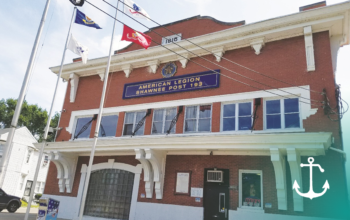


Red Shield Boys Club..Gordon Brown – ” Arts and Crafts”…plaster molds we painted and ” gimp” lanyards and key chains ..Bob Minton ( football) George Hinds ( basketball) Jack Calvert ( baseball) ….and ” bombs away in the gym” until Check in all games !!