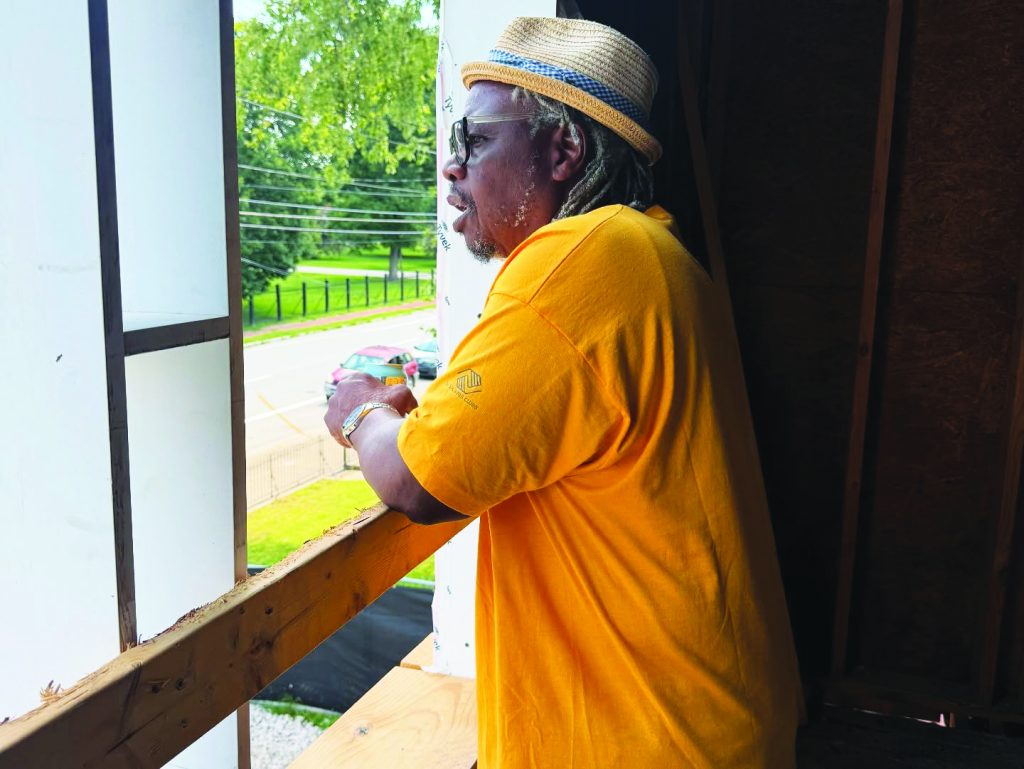

It’s been a few months, but we’d like to pick up the next episode in the Ed “Nardie” White oral history files, as White celebrates the closing of his photography exhibit In Plain Sight, Canaries of the American Soul at the prestigious Moreman Gallery at 710 West Main Street downtown. Nardie is a member of the Portland Museum board of directors and lifelong Portland artist and activist. Now we return to the beginnings of Nardie’s non-profit career, which culminated in the founding of the River City Drum Corps.
Not caught up with Nardie’s story? Find the other parts online here:
Ed “Nardie” White Archives – Portland Anchor
It was when his unemployment nearly expired in the mid-‘80s from International Harvester that the director position at the Parkland Boys and Girls Club was open. The secretary at the Portland Boys and Girls Club (which Nardie and his siblings frequented as youngsters), who helped him type up his grants for the Shawnee Youth Council, held his grant hostage, saying she wouldn’t type it up unless he applied for the open director job, apparently knowing his aptitude and gift for such work better than he did. In doing so, she launched a full-time nonprofit arts career, when White was well into his thirties.
“My brothers and I, through our churches, started this group called Shawnee Youth Council. It was a program that we provided through our church leagues for the community. We did softball in the summer, tee ball in the summer and flag football in the fall, okay? And we did that at Jewel Park, and which is over off 38th Street. And Jewel Park now has a Boys Club in the park. And my brothers wanted to do it, but you know, they couldn’t, so I became the manager of it.”
“That was the time before the city government merger, and so each alderman had probably a $200,000 slush fund that he or she was able to use within their community, to basically do whatever they wanted to do, you know, just long as it fit the parameters of the grant. It had to be a nonprofit, and they go in and they write an ordinance, and they give you money. So that’s how we funded it. We would like probably get maybe $5,000 a year to do a football league, to do summer softball and t-ball. I got coaxed into that, because the people in my church knew that that’s what we did at the Boys Club. And they said, ‘Well, you might as well come on over and do it here’. You know, everybody twist your arm.”
“Peggy Pruitt, who was the secretary at Portland, always was trying to coax me back in the Boys Club work. I was doing community work when my she blackmailed me…I had this grant to do, and she did all my typing. She said, ‘They got a job for the director of Parkland’. And I said, ‘I don’t want to do that’, you know. And I didn’t have a job, because by then, my unemployment was just about ready to run out from the factory. She said, ‘Well, I’m not gonna type this stuff unless you fill this out’. I said, ‘Okay, Peggy, okay’. Because every time I would see her, that’s what she do. If I saw her before she saw me, I’d go the other way. But she cornered me in Krogers, and I said, oh sh-t. Be damned if they didn’t hire me (big laugh). So that was five years of my life, but it was good. That’s where the drum corps birthed from.”
“(big laugh) It was another thing I stumbled into…all my life has been stumbling from one thing to another. When I got to the Parkland Boys and Girls Club, there was a dance company called the Imani Dance Company, which was an African-based dance company. They were housed at the 10th Street Y, and they needed a place to rehearse. I was the director, and so I had this space, and I let them come in, and then that’s how I stumbled into drumming. I couldn’t drum. I couldn’t drum to save my own…I don’t even have rhythm, as quiet as it’s kept. Something that was only supposed to be a summer program lasted 30 years.”
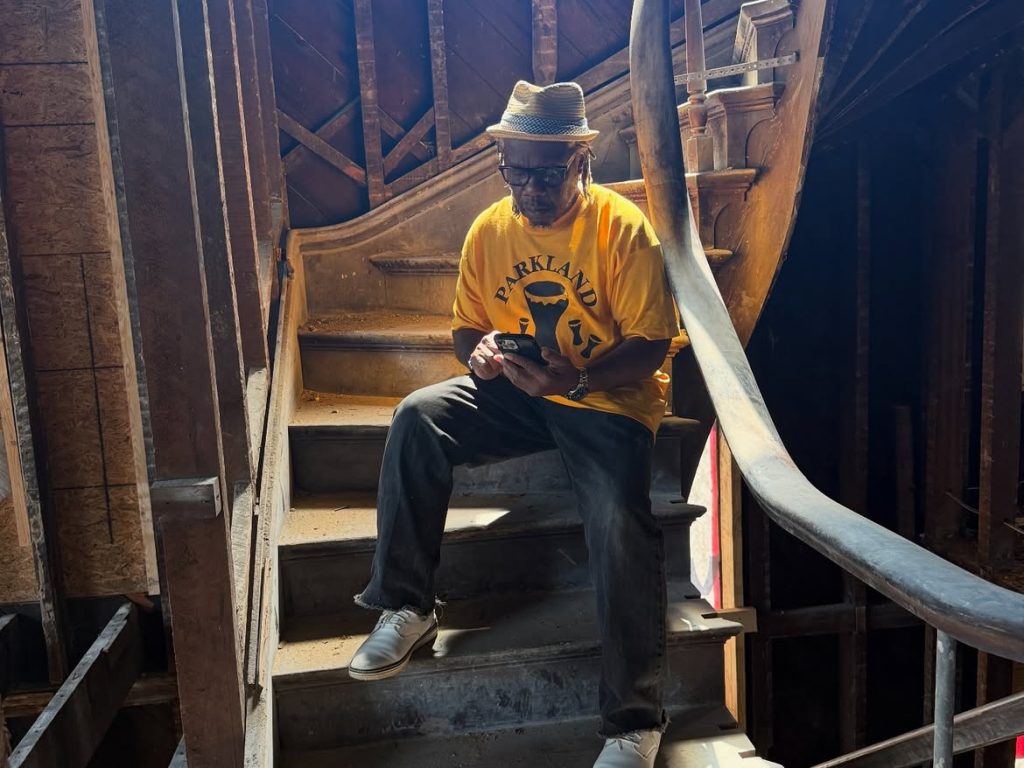
Although he enjoyed five good years there – and this is the period that the drums corps started to come together – it was not without conflict. The Boys and Girls Club was run by the Salvation Army, an organization about which White very strong opinions. They eventually butted heads to the point that he was fired, when he was somewhat rescued by his friend – and later wife and visionary co-founder of the River City Drum Corps – Zambia Nkrumah. She was a teacher at Westport Middle School with ties to a group that launched Louisville-based arts programming deep into the mountains of eastern Kentucky. Nardie was called upon to run the program, having developed an interest and skill in collecting and creating African masks. He would stay in hotels or with host families for a week or two at a time.
“My wife was…she was my boss. She was my boss and her being a teacher, she taught me the mechanics, the management, the class preparation to write lesson plans and to really hone my grant writing skills. And I really…she was just my friend then. I really respected her, because I thought, because she liked me, that she was going to do my work. She said, ‘No, that sh-t ain’t happening’. She used to grade my papers, put red marks all over them…I’d be mad as hell (big laugh). Like I’m back in damn elementary school. But she said, this is what you gonna have to do, because when you get out there, I’m not going to be there. Whether this works or not, it’s going to be based on you, knowing how to write a lesson plan, knowing how to control your class, knowing how to write the grants. Because I’m not going to be there. And she was right, because most of my work was done in eastern Kentucky: Hazard, Prestonsburg, West Liberty, all right off the Mountain Parkway. It was amazing. It was amazing work. I mean, really, really, truly amazing work. I met some real interesting people in the mountains. First time ever been the mountains, you know, and all of the stereotypes that you hear from. It’s kind of like Portland. If they like you, they like you. If they don’t like you, they don’t like you. So, the same tensions that we have, they have, but they embraced us, and we did that program for seven years.”
“That’s because then my wife, you know, she became my wife, you know, she just guided me to…it just happened. She just stayed on me. And I said, okay, and I took this ideal and turned it into a job. The artwork that I do now is based on that artwork of starting from that milk jug, making that mask. She said, ‘You gonna come to my class and you gonna teach this mask making class.’ So when that happened, that’s when the drum corps started to take off. I mean, it just happened organically.”
When he was denied time off, he quit, and back in Louisville forces were conspiring to make the drum corps a real thing. But you’ll have to wait until the next episode! Stay tuned to the Portland Anchor for Nardie’s further adventures.